Do 3D Websites Increase Conversions? What the Evidence Says
Interactive 3D can measurably lift conversion, but the published evidence is strongest for product-level 3D rather than whole-site 3D. Shopify reports that on Rebecca Minkoff product pages, shoppers who viewed a 3D model were 44 percent more likely to add to cart and 27 percent more likely to order. The mechanism is understanding, not novelty: 3D converts when it removes a specific doubt a photograph could not. A decorative scene that answers nothing tends to cost conversions through the load time it adds.
The short answer
Yes, when the 3D removes a doubt. No, when it exists to impress. That sounds like a hedge and it is not, because the published data splits along exactly that line.
What the numbers actually show
The most quotable figures come from e-commerce, where the 3D is the product itself. Shopify publishes merchant results for Rebecca Minkoff, where shoppers who viewed a product as a 3D model were 44 percent more likely to add it to cart and 27 percent more likely to place an order, and shoppers who viewed a product in augmented reality were 65 percent more likely to buy.
- More likely to add to cart (3D model)
- 44%
- More likely to place an order (3D model)
- 27%
- More likely to purchase (AR view)
- 65%
Rebecca Minkoff merchant case study, published by Shopify. Product-page 3D and AR, not whole-site 3D. Treat as directional, not as a benchmark for your category.
Where the effect comes from
Strip away the novelty and three mechanisms are left. Each of them can be designed for, which is the useful part.
- Comprehension. Scale, finish, fit and mechanism are hard to photograph and easy to rotate. Every question a visitor answers themselves is a question they do not email you about.
- Direction. Motion controls where the eye lands next, so the order in which someone reads your page stops being an accident.
- Positioning. A page that looks unlike its category is read as a different tier of business before a word is processed, which changes what your price sounds like.
The first impression is faster than reading
Research published in Behaviour and Information Technology found that people can judge the visual appeal of a web page in about 50 milliseconds, and that those snap judgements track closely with judgements made with far more time. You do not get a chance to explain yourself first.
That first impression then leaks into judgements about the business. When Stanford researchers asked 2,684 people to assess website credibility and coded what they actually commented on, the look of the design came up in 46.1 percent of comments, ahead of information structure and information focus. For a coach, consultant or clinic, where the whole decision happens on one page, that is the ball game.
The part that quietly decides it: speed
Google and Deloitte studied 37 retail, travel, luxury and lead generation brands across more than 30 million user sessions, isolating mobile site speed. A 0.1 second improvement was associated with an 8.4 percent lift in retail conversions and a 9.2 percent lift in average order value.
Put the two findings next to each other and the design brief writes itself. A tenth of a second is worth measurable revenue. A 3D scene that adds two seconds has to earn back a great deal before it breaks even, which is why weight is treated as a design constraint rather than a cleanup task.
When 3D costs you conversions
- It delays the message. If the headline is behind a loading bar, you have put a queue in front of your pitch.
- It answers nothing. A rotating abstract shape adds weight and removes no doubt.
- It hijacks the scroll. Taking control of scrolling away from the visitor is the fastest way to make a page feel broken.
- It only exists on desktop. With about two thirds of India’s web traffic on mobile, a desktop-only scene is a decoration most of your audience never sees but still waits for.
How to tell whether yours is working
Enquiries are too far downstream to diagnose anything on their own. Watch these instead, and compare against the same page before the scene existed.
Segment the result before you believe it
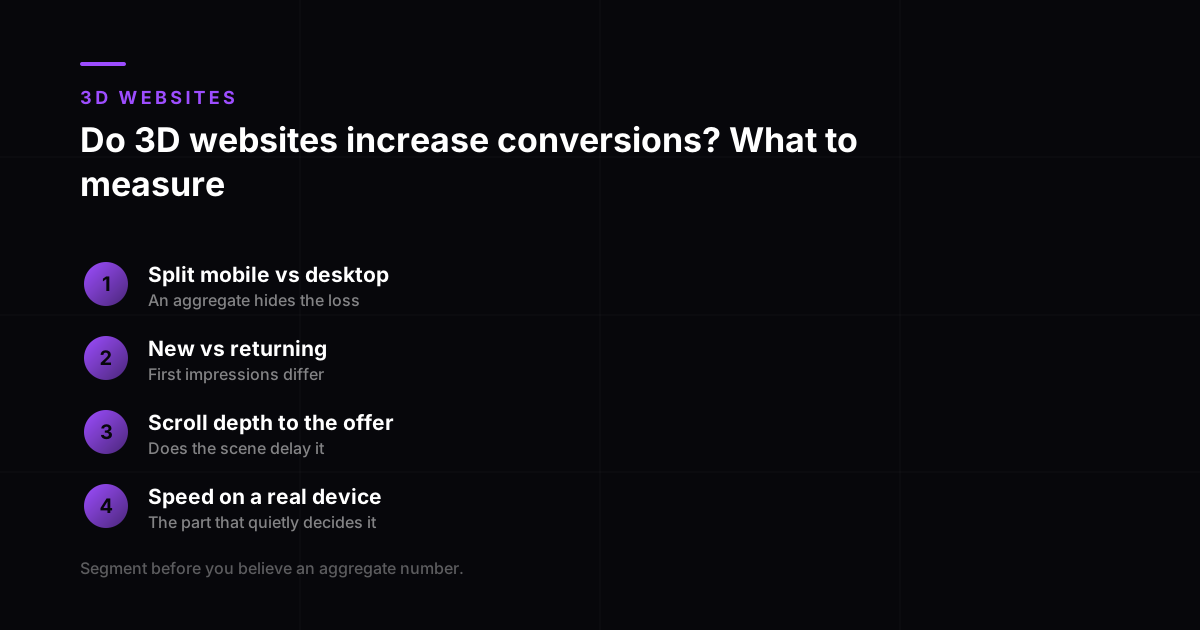
An aggregate conversion number will hide the thing you most need to know, because a 3D scene does not affect every visitor equally. Split the result at least three ways: mobile against desktop, new against returning, and by connection quality if your analytics will tell you. A scene that lifts desktop conversion and depresses mobile conversion can look like no change at all in the total, while quietly costing you the larger half of your traffic.
That split is also the fastest diagnosis when the number moves the wrong way. If the loss concentrates on mobile, the problem is almost always weight rather than concept, and the weight budget for a 3D scene covers the budget that prevents it. If it is even across devices, the scene is competing with your message rather than carrying it. 3D versus a template is the honest comparison if the answer is that it was not worth the weight, and our 3D service scopes builds against these measurements rather than against a look.
| Signal | What it tells you |
|---|---|
| Scroll depth past the hero | Whether the scene invites people in or holds them at the door |
| Time to first meaningful paint on mobile | What the scene costs the visitor before your message arrives |
| Interaction rate with the scene | Whether anyone rotates, drags or explores, or simply scrolls past |
| Enquiry quality, not just count | Whether people arrive understanding what you do |
| Repeat support questions | A drop means the scene is answering a doubt. No drop means it is decoration |
Frequently asked questions
Do 3D websites increase conversions?
They can, and the evidence is strongest where the 3D is the product. Shopify reports that Rebecca Minkoff shoppers who viewed a 3D model were 44 percent more likely to add to cart and 27 percent more likely to order. Whole-site 3D has far less published data behind it, and the effect there depends on whether the scene removes a real doubt or simply looks impressive.
How much can a 3D website improve my conversion rate?
Nobody can tell you honestly, and anyone quoting a specific percentage for your business is guessing. The published product-page figures run from 27 to 65 percent lift on specific actions for one merchant, which is directional rather than a benchmark. Judge it on your own before-and-after numbers on the same page.
Is 3D worth it for a service business with no physical product?
Sometimes, and for a different reason. There is nothing to rotate, so the value is in direction and positioning rather than inspection: guiding the eye through an argument, and looking unlike every other consultant in the category. If the scene cannot do either of those, spend the money on the copy.
Could a 3D website actually lower conversions?
Yes, most often through delay. Google and Deloitte found a 0.1 second mobile speed improvement associated with an 8.4 percent lift in retail conversions, so a scene that adds two seconds is starting from a long way behind. Scenes that hijack scrolling or exist only on desktop also reliably cost more than they return.
What should I measure after adding 3D?
Scroll depth past the hero, mobile load time, interaction rate with the scene, enquiry quality and whether your recurring support questions drop. That last one is the most honest signal: if the same question stops arriving, the scene is doing commercial work rather than decorating.
Does 3D help with AI search and AI answer engines?
Not directly, because a 3D canvas contains no text for an engine to read. What helps is the HTML underneath: clear answers, clean heading structure and schema. Build the page so the scene is additive and the words stand alone, and you keep both the visual impact and the citation.