3D Website vs Template Website: What Actually Changes
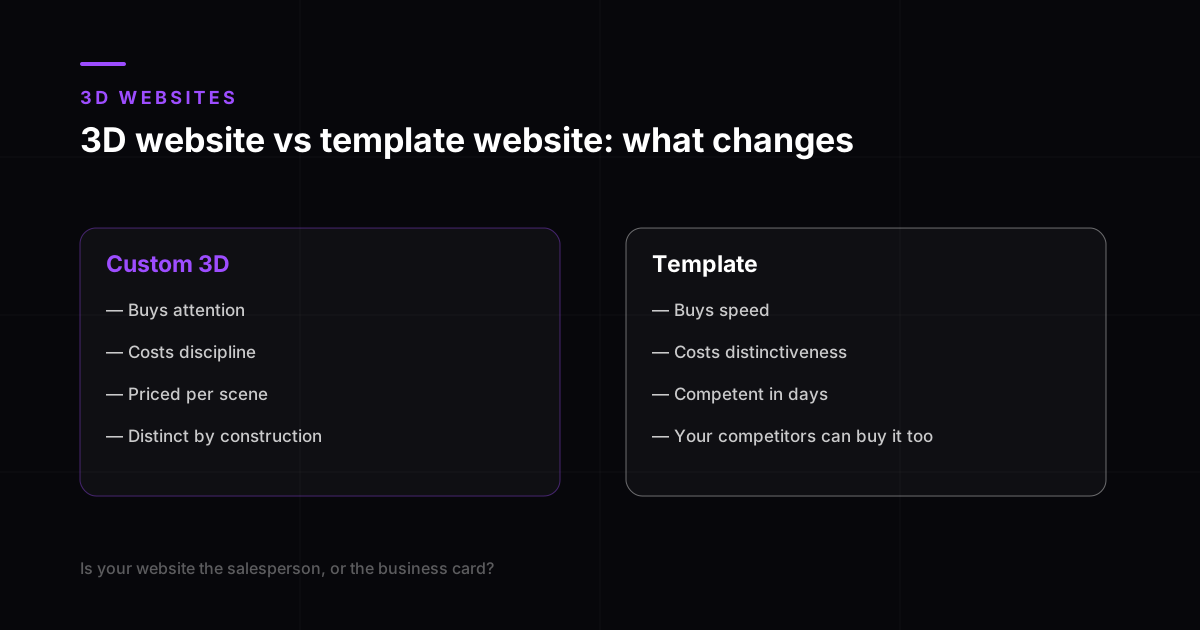
A template website is fast and cheap to launch and looks like every other site built on the same theme, because the layout, the motion and often the copy structure were designed before anyone knew what your business was. A custom 3D motion website is designed around your business from a blank page, so it can direct attention deliberately and look unlike your category, at the cost of a longer build and real discipline on performance. The template is the right choice when speed to launch matters more than being remembered.
What a template actually is
A theme is a finished set of decisions. Layout, spacing, type scale, colour system, animation, section order. Someone made every one of those calls before they knew what you sell or who buys it. You then swap in your photographs and your words.
That is not a criticism. It is the entire value proposition, and it is a real one. You get a competent site in days for a fraction of the price. The cost is that competence is where it stops, and that your three closest competitors can buy the same file this afternoon.
3D website vs template website: the head-to-head
| Template site | Custom 3D motion site | |
|---|---|---|
| Layout | Chosen from a library, adjusted to fit | Designed from a blank page around your business |
| Motion | Whatever shipped with the theme | Directed scene by scene, against a weight budget |
| Copy | Often generated, then lightly edited | Written by a person, for real search intent |
| Page weight | Carries features you never switch on | Only what the page needs to do its job |
| Search structure | Inherited from the theme defaults | Decided before design starts |
| Time to launch | Days | Weeks, set mostly by approvals on your side |
| Cost | Low and predictable | Higher, and it is a build not a purchase |
| Ownership | You rent the theme, and sometimes the platform | Domain, hosting and site in accounts you own |
The sameness problem is not aesthetic
People decide how a page feels before they read a word of it. In a study published in Behaviour and Information Technology, participants rated the visual appeal of homepages shown for just 50 milliseconds, and those snap ratings correlated strongly with ratings given far more time. Fifty milliseconds is not long enough to read your headline. It is long enough to decide you look like the last four sites.
That judgement then colours everything after it. Stanford researchers had 2,684 people evaluate site credibility and coded what they commented on. The look of the design was mentioned in 46.1 percent of comments, more than any other factor, ahead of information structure and information focus. Buyers say they judge on substance. They demonstrably start with the surface.
Decoration versus direction
Theme animation exists to look alive. Elements fade up as you scroll because fading up is what the theme does, not because anything on the page needed emphasis. It is applied evenly, which is the giveaway. Everything animating means nothing is being pointed at.
Directed motion does one job: it tells the eye where to go next. That is the hardest problem on any page above the fold, and solving it deliberately is most of what separates a considered build from a decorated one. A 3D scene is worth its weight when it does that. When it just spins, it is theme animation with a bigger download.
Where templates genuinely lose money
- Unused weight. A theme built to serve every possible buyer ships sliders, icon packs and scripts your site never calls, and you usually cannot strip them out.
- Inherited search structure. Heading hierarchy, URL patterns and schema come from the theme author, who was not targeting your queries.
- Copy written to fit the boxes. The layout dictates a three-column feature grid, so three features get invented to fill it.
- Nobody accountable. Domain at one company, hosting at another, analytics never connected, and no single person who can fix the whole thing.
Note what is not on that list: templates are not inherently slow, and a custom build is not inherently fast. A carelessly built 3D site can be far heavier than a lean theme. Weight is a discipline, not a category. That argument is worked through properly in the performance guide.
When the template is the right answer
- You need to be live this month and the deadline is real.
- The site is a formality. People find you elsewhere and the website only has to confirm you exist.
- You are still testing the offer. Do not commission a custom build for a business model that might change in a quarter.
- The budget only covers one thing. Take the template and spend the difference on the writing, which is what actually converts.
Anyone who tells you a template is always wrong is selling. The question is narrower than it looks: is your website the salesperson, or the business card? A business card should be cheap. A salesperson should be measured on what it brings in.
The middle option most people miss
The choice is presented as template or custom 3D, and it is rarely that binary. Most of the distinctiveness of a custom build comes from a small number of decisions, and most of the cost comes from applying them everywhere.
One scene, everything else conventional
A single well-built 3D moment on the homepage, with the rest of the site as ordinary fast HTML, gets most of the effect for a fraction of the budget and almost none of the risk. The scene carries the impression; the other twenty pages carry the content and load instantly. It also fails safely. If the scene is heavy on a given device, one page is affected rather than the whole site.
This is the shape we recommend most often, and it is worth pricing before committing to either extreme. What a 3D website costs in India prices it per scene for exactly this reason, what a 3D website actually is covers what one scene involves, and our 3D motion website design service scopes it that way by default.
Frequently asked questions
Is a 3D website better than a template website?
It is better at being remembered and at directing attention, and worse at being live next week. A template is a set of design decisions made before your business existed, which is what makes it fast and what makes it generic. Choose the custom build when the site has to do sales work, and the template when it mainly has to exist.
Are template websites bad for SEO?
Not automatically, but they hand you someone else’s defaults. Heading hierarchy, URL structure, schema and internal linking all arrive as the theme author configured them, aimed at no particular set of queries. You can fix most of it. The difference with a custom build is that search structure is decided before design starts rather than retrofitted afterwards.
Will a custom 3D site load slower than my template?
Only if it is built without a weight budget. A 3D scene adds geometry, textures and a render loop, which is real cost, but a custom build also ships nothing you do not use, while a theme carries features you never switch on. A carelessly built 3D site loses to a lean template. A disciplined one usually wins on both weight and speed.
Can I add 3D to my existing template site?
Sometimes, and it is often a poor trade. You end up paying for the scene on top of the theme weight you already carry, inside a layout that was not designed to give the scene anywhere to breathe. If the current site is otherwise working, the higher-return fixes are usually the copy and the page speed.
How long does a custom 3D website take compared to a template?
A template can be live in days. A custom build runs into weeks, and the timeline is usually set by how quickly decisions get approved on your side rather than by production. Agreeing upfront who signs off is the single biggest thing you control about the schedule.
What happens to my existing pages if I rebuild?
They get triaged before anything is designed. Pages that already bring traffic keep their URLs and their content, and anything that must change gets a redirect. Rebuilding a site that ranks without a redirect map is the fastest known way to lose traffic you already paid for.