Freelancer, Agency or In-House: Who Should Make Your Video Ads?
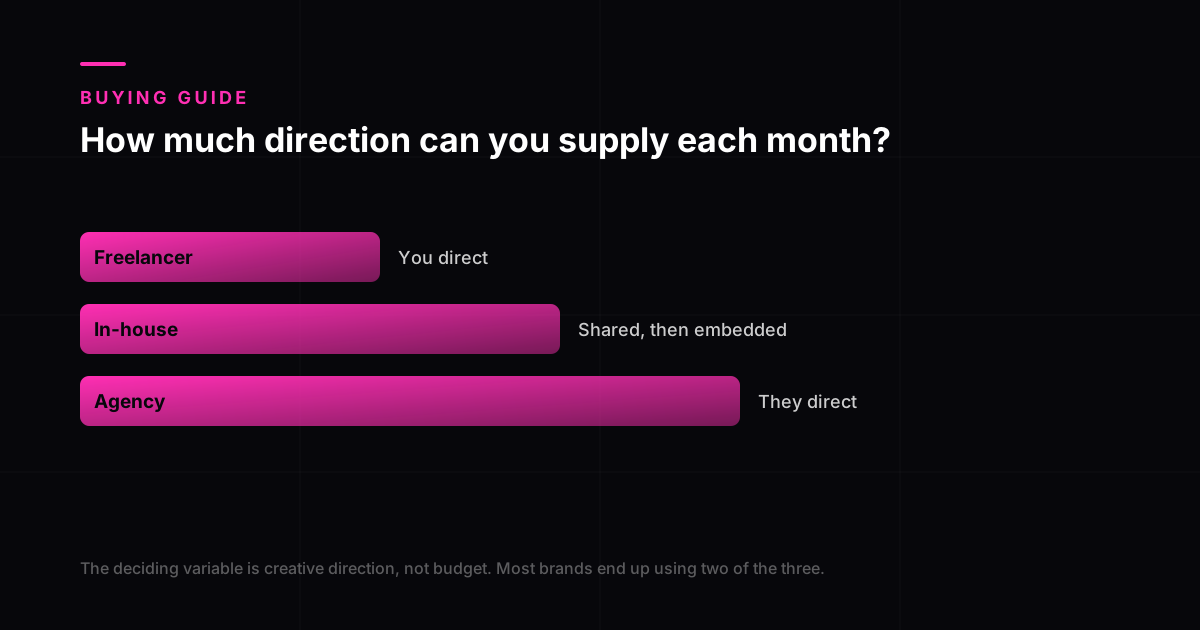
Choose a freelancer when you need a small number of specific assets and you can art-direct them yourself. Choose in-house when video is continuous, strategic and you can keep someone busy for most of the year. Choose an agency when you need sustained output across formats without hiring, and you would rather manage one relationship than five. The deciding variable is not budget. It is how much creative direction you can personally supply each month.
The question underneath the question
People frame this as a budget decision. It is really a direction decision. Every route can produce a good video. They differ in how much thinking you have to do before the video exists. What follows is our own read from running this work, not a survey finding, so weigh it against your own situation.
So the honest first question is not what you can spend. It is how many hours a month you personally can give to briefing, reviewing and deciding. Answer that and the choice mostly makes itself.
The comparison, without the sales pitch
| Freelancer | In-house | Agency | |
|---|---|---|---|
| Best at | Specific assets, defined briefs | Continuous, brand-embedded work | Sustained volume across formats |
| Direction required from you | High | Moderate, and reducing over time | Low |
| Speed to start | Days | Months | Days to weeks |
| Cost shape | Per project | Fixed monthly, regardless of output | Retainer or per project |
| Consistency across assets | Varies by person | Highest, once established | High, if the team is stable |
| Capacity ceiling | One person’s calendar | Headcount | Elastic |
| Fails when | You need volume or cover | Volume drops and the cost does not | The brief is vague and nobody owns it |
When a freelancer is genuinely the right call
- You need three videos, not thirty, and you know what they are.
- You can write a real brief and give clear feedback without a meeting.
- The work is a defined craft task: an edit, a voice, a motion pass.
- You are testing whether video moves anything at all before committing a budget line.
- Your brand look is already settled, so consistency is a matter of following it rather than inventing it.
When in-house wins
When the work never stops. A brand posting several times a week across formats has enough continuous demand to keep a person genuinely busy. An in-house editor also accumulates something no external party can. Your product, your customers, your last two years of results. Check the budget context before you hire. Gartner’s 2026 CMO Spend Survey puts 15.3 percent of marketing budgets going to AI while only 30 percent of CMOs say they are ready to scale it.
It stops working when volume is uneven. A fixed monthly cost against a variable workload is fine in a busy quarter. It is painful in a quiet one. That is the same reason fixed production overhead is the first thing to examine when costs need to come down.
When an agency earns its margin
- You need consistent output across several formats at once, and you cannot hire for all of them.
- You would rather manage one relationship than a freelancer per discipline.
- You need cover. Freelancers get ill, take holidays and take other work.
- You want the strategy and the production to sit in the same place, so nobody is waiting on a brief.
- You need the rights position clean and documented, rather than negotiated per person. Disclosure sits here too: Google Ads requires AI-generated creative to be labelled, manually when it came from a third-party tool.
The rights point is worth more than it sounds. Per-creator licensing, time limits and paid-media restrictions are a recurring administrative cost, and creator-led work carries them by default.
The mixed model most brands land on
One in-house person who owns brand, strategy and final judgement, plus an external pipeline for volume. The internal person supplies the direction, which is the scarce resource, and the external pipeline supplies the throughput, which is the purchasable one.
That split also matches how paid social now works, where delivery is increasingly automated and output volume is most of the remaining job. Meta states that Advantage+ campaign budget decreases cost per acquisition by an average of 4.6 percent on its own account, which is a vendor figure but a clear signal of where the platform is putting the optimisation. If you are deciding between suppliers, the nine questions worth asking before you sign apply to freelancers and agencies equally, and the agency-versus-tool comparison covers the fourth option nobody lists: doing it yourself with software.
Frequently asked questions
Should I hire a freelancer or an agency for video ads?
A freelancer, if you need a small number of defined assets and can supply the creative direction yourself. An agency, if you need sustained output across several formats and would rather manage one relationship than several. The deciding variable is how much direction you can personally supply each month, not the budget.
When does an in-house video person make sense?
When the work is continuous enough to keep them busy most of the year. An in-house editor accumulates product and customer knowledge that no external party can match. It stops making sense when volume is uneven, because the cost is fixed and the workload is not.
Is an agency more expensive than a freelancer?
Per asset, usually yes. Per month of sustained output across formats, often not, once you account for cover during illness and holidays, the management time of coordinating several specialists, and rights administration handled per person rather than once.
What is the most common mistake in this decision?
Buying volume before knowing what a winning creative looks like. Committing to a retainer at the start scales whatever you happened to make first. Testing with a freelancer, learning what moves the numbers, and then scaling that is the cheaper order to do it in.
Can I use more than one of these at once?
Most brands that get this right do. The common shape is one internal person owning brand, strategy and final judgement, with an external pipeline supplying throughput. Direction is the scarce resource and stays inside. Production capacity is purchasable and does not have to.