AI UGC Ads: 7 Script Examples That Convert
The seven AI UGC ads examples that convert most reliably are the problem-agitate-solve, the honest review, the before and after, the objection flip, the discovery story, the comparison, and the demonstration. Each follows a fixed beat structure, which is what makes them fast to produce as variants.
Why structure beats inspiration
A UGC ad has roughly 30 seconds and three beats: stop them, show them, ask them. Every format below is a different way of arranging those three. Once you have the structure, writing the tenth variant takes minutes rather than an afternoon. If the category itself is new to you, start with what AI UGC ads are and how they compare to influencer marketing.
Seven AI UGC ads examples, by format
| Format | Opening beat | Best for |
|---|---|---|
| Problem, agitate, solve | Name the frustration out loud | Cold traffic, any category |
| Honest review | "I did not think this would work" | Skeptical or crowded categories |
| Before and after | Show the after first, then rewind | Visible transformation products |
| Objection flip | "I almost did not buy this because..." | High price or high commitment |
| Discovery story | "I found this by accident" | New or unfamiliar categories |
| Comparison | "I tried three. Here is what happened." | Competitive categories |
| Demonstration | Start mid-use, no introduction | Products where use is the proof |
The beat structure, in detail
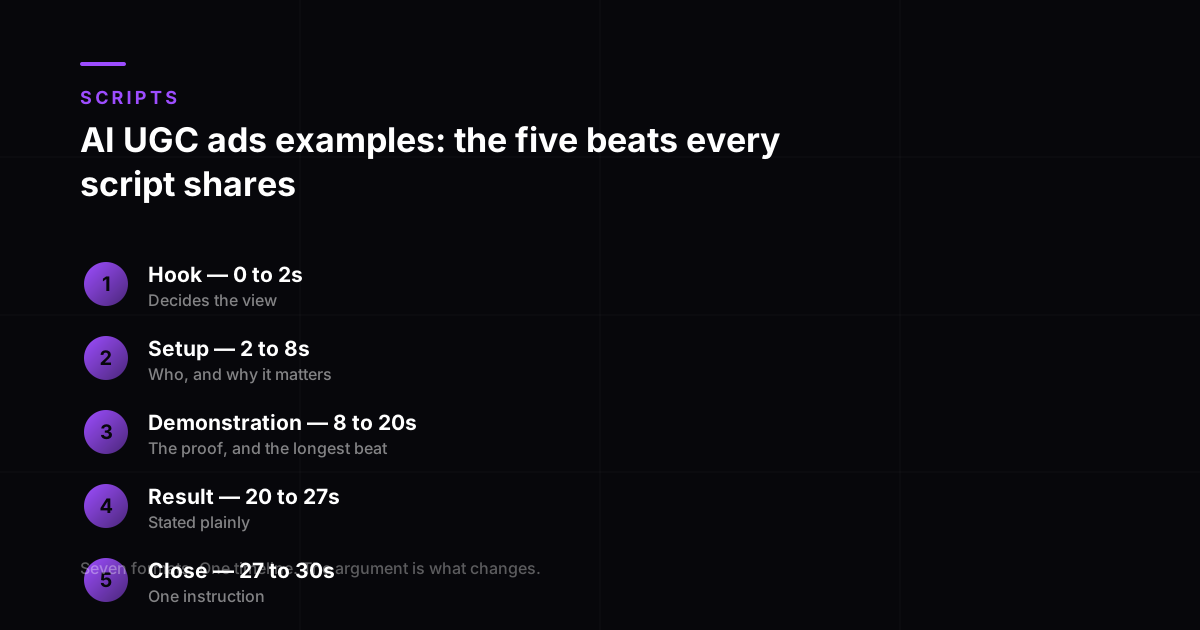
- Seconds 0 to 2, the hook. One line, spoken, no logo, no title card. This is where most of your drop-off happens, so it decides the ad.
- Seconds 2 to 8, the setup. Who they are and why the problem matters. Keep it specific and short.
- Seconds 8 to 20, the demonstration. The product enters mid-sentence, never on a turntable.
- Seconds 20 to 27, the result. What changed, stated plainly, without superlatives.
- Seconds 27 to 30, the close. One instruction. Not three.
What the retention data says about openings
The figures below are practitioner benchmarks that circulate widely across creative-testing write-ups rather than findings from controlled research, so treat the ordering as the signal and the exact percentages as indicative. The ordering is what matters here, because it contains one genuinely counter-intuitive result.
| Opening type | Reported 3-second retention | Format it maps to |
|---|---|---|
| Pattern interrupt | 72% to 84% | Demonstration, start mid-use |
| Curiosity gap | 65% to 78% | Discovery story |
| Direct question | 58% to 72% | Problem, agitate, solve |
| Bold claim | 55% to 70% | Before and after |
| Problem | 50% to 65% | Problem, agitate, solve |
| Social proof | 45% to 60% | Honest review |
Social proof coming last is the surprise, because it is the instinct most brands reach for first. Opening on a rating or a testimonial signals advertisement immediately, and the viewer acts on that before hearing what the ad is about. It does not mean the honest review format fails; it means that format should not open on the proof. Lead with the scepticism and let the proof arrive at second eight.
Hook lines that work across formats
- "I was about to give up on [category] until..."
- "Nobody tells you this about [product category]."
- "I spent [amount] before I found the thing that worked."
- "If you have [specific problem], stop scrolling."
- "This is going to sound like an ad. It is. Watch anyway."
Note what none of them do: state the brand name, describe the product, or open with a greeting. "Hi guys" costs you the two seconds that decided the ad.
How to pick yours
Match the format to the reason people are not buying. Skeptical market takes the honest review. High price takes the objection flip. Unfamiliar category takes the discovery story. Visible result takes the before and after. Then test them against each other: here is how to A/B test video ads.
Then produce three variants of that one format, changing only the hook. That is a real test, and it tells you something reusable about your audience rather than about one ad.
What to change between variants
The point of a variant is to isolate one decision. Change two things and a win tells you nothing you can reuse. In rough order of how much they move the result:
- The hook line. Highest leverage by a distance, and the only thing worth changing in a first round.
- The opening shot. A face, a product mid-use, or a result on screen are three different ads even with identical audio.
- The problem named in the setup. Same product, different reason to buy, which is how one script reaches a second audience.
- The close. An instruction beats an invitation, but which instruction is worth one test on its own.
- The presenter. Change last, not first. It feels like the biggest variable and usually is not.
Keep the body identical across the round. If you want the seven formats cut as a tested set rather than scripted one at a time, that is what our AI UGC video ads service produces.
Turning one format into a testable round
A format is not a test on its own. The round is three scripts sharing a structure and differing in exactly one decision, which is what makes a result reusable rather than a one-off.
That discipline matters because the odds are unforgiving: Motion's analysis of 578,750 Meta creatives puts the winner rate near 5 percent. Three variants of one format is a real sample of one idea; three unrelated ads is three ideas each sampled once, which tells you nothing you can act on. how to test video ads properly covers budget and duration, and AI UGC versus influencer marketing covers where the scripts should come from in the first place.
- Hook: decides the view
- 0 to 2s
- Setup: who and why
- 2 to 8s
- Demonstration: the proof
- 8 to 20s
- Result: stated plainly
- 20 to 27s
- Close: one instruction
- 27 to 30s
The same five beats underlie all seven formats. What changes between them is the order of the argument, not the shape of the timeline.
The demonstration beat is the longest for a reason: it is the only part that carries proof rather than assertion. Formats that shorten it to make room for a longer hook tend to underperform, because the viewer is left with a claim and no evidence. Within a UGC script the demonstration is where the persuasion actually happens; everything around it is framing.
Frequently asked questions
How long should a UGC ad script be?
Around thirty seconds of finished video, which is roughly seventy to eighty spoken words. The beat structure matters more than the count: two seconds for the hook, six for the setup, twelve for the demonstration, seven for the result and three for the close. If a script runs long, the setup is almost always the part that has swollen.
Which UGC format works best?
The one matched to why people are not buying. Sceptical or crowded categories take the honest review. High price or high commitment takes the objection flip. An unfamiliar category takes the discovery story. A visible transformation takes the before and after. Picking by which format you like reading is the common mistake.
Can I use the same script with a different hook?
Yes, and that is exactly how to test properly. Hold the body constant and vary only the opening line, so the result tells you something about which hook works rather than confounding several changes at once. Three variants of one format is a real test; three completely different ads is three separate guesses.
How do I write a UGC script for an AI presenter?
Write it in the second person and the present tense rather than the first person and past tense. Here is what happens when you use this keeps the demonstration and drops the claim that a synthetic presenter cannot legitimately make. The information is identical and the compliance problem disappears.
How many scripts do I need to find one that works?
Plan for several, because the first version of any hook is rarely the strongest. A reasonable starting point is one format, three hooks, tested against each other, then iterate on whichever wins. Expecting the first script to be the winner is the most common reason brands conclude the format does not work for them.