How Much Does an AI Video Ad Cost in India? (2026)
AI video ads in India typically run from around ₹12,000 for a single UGC-style ad, with product video and reels sitting in similar territory and rising with variant count. Price is driven by format, how many variants you need, script complexity and how many aspect ratios you want. Cinematic commercials and brand films are priced on a different basis entirely and are covered separately.
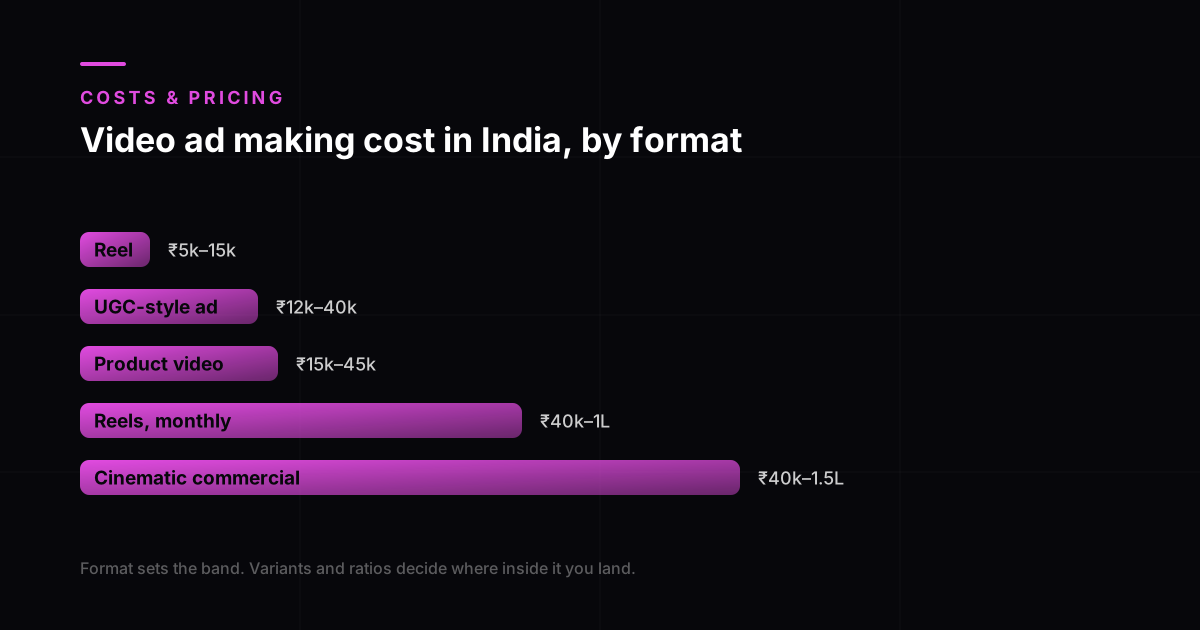
Video ad making cost in India: the short answer
AI video ads in India typically run from ₹12,000 for a single UGC-style ad to around ₹1,50,000 for a cinematic commercial with full concept and sound design. Most e-commerce brands land somewhere in the middle. Here are the typical ranges by format.
| Format | Typical range in India |
|---|---|
| UGC-style ad (single) | ₹12,000 - ₹40,000 |
| Product video ad | ₹15,000 - ₹45,000 |
| Cinematic commercial | ₹40,000 - ₹1,50,000 |
| Reel (per video) | ₹5,000 - ₹15,000 |
| Reels (monthly, 8 to 12) | ₹40,000 - ₹1,00,000 |
| Training video (per finished minute) | ₹8,000 - ₹20,000 |
- Reel (per video)
- ₹5,000 to ₹15,000
- UGC-style ad (single)
- ₹12,000 to ₹40,000
- Product video ad
- ₹15,000 to ₹45,000
- Reels (monthly, 8 to 12)
- ₹40,000 to ₹1,00,000
- Cinematic commercial
- ₹40,000 to ₹1,50,000
Format sets the band; variant count, aspect ratios and revisions decide where inside it you land. Anchored to published Indian agency rates and our own published pricing.
The bands overlap deliberately, because format is not the only variable. A simple cinematic piece can cost less than a complex product ad with six separately cut ratios. What the chart does show reliably is the ordering. The gap between the cheapest and most expensive format is roughly thirtyfold. That is why "what does a video ad cost" has no single answer worth quoting.
What actually moves the price
- Variant count. Three hooks cost more than one, and usually earn it back, because testing is what moves cost per acquisition.
- Script complexity. A single-benefit demo is quicker than a narrative with a turn in it.
- Number of aspect ratios. A Meta cut, an Amazon cut and a Shopify loop are three different edits, not one file resized.
- Revision rounds. Two are included on every project. Scope creep is what makes quotes go sideways, so the brief matters.
- Whether usable source assets exist. Good product photography makes everything cheaper, and often you can make a product video from photos alone. Bad photography limits what AI can do with it.
Why traditional production costs more
A traditional shoot pays for a director, a crew, a location or studio, talent, equipment, travel, and a post house. Those are real line items on a real invoice, and they exist before a single frame is shot. A 30-second commercial in India routinely runs into lakhs, most of which never touches the creative. AI and traditional video ads compared covers where each approach still wins.
AI production removes the crew and the calendar, not the craft. The concept, the script, the direction and the edit still take the same care. That is where the remaining budget goes, and it is why the output can look premium while costing a fraction.
What cheap costs you
You can buy an AI video on a freelance marketplace for ₹3,000. Here is what you get: a stock template, a generic script, an avatar that has read the same lines for forty other brands, and no idea whether the hook works. It will not survive a Meta review if the disclosure is wrong, and it will not convert if the angle is wrong.
The cost of a bad ad is not the ₹3,000. It is the ad spend you put behind it while it does nothing, plus the two weeks you lose before you notice.
What to ask any AI video vendor before you pay
- Who writes the hook, and what is it based on?
- How many aspect ratios are included, and are they cut separately or resized?
- Who handles AI disclosure for Meta and TikTok, and do I get documentation?
- Do I get full commercial rights including paid media, with no time limit?
- How many revision rounds are included, and what counts as a revision?
- What happens if the first cut misses the brief?
- When would you tell me AI is the wrong tool for this?
Why the second variant costs a fraction of the first
This is the part that changes how you should budget, and it is the single biggest structural difference from a traditional shoot. Cost in AI video is front-loaded almost entirely into the first version.
The first ad pays for the thinking: understanding the product, deciding the angle, writing the hook, establishing the look, and getting the presenter and setting right. The second ad changes the hook and reuses all of it. On a traditional shoot the second ad means the crew comes back, so it costs roughly what the first did.
| Traditional shoot | AI production | |
|---|---|---|
| First ad | Full cost | Full cost |
| Second variant, new hook | Close to full cost again | A fraction |
| Fifth variant | Five shoots | One production, five renders |
| Changing one line of script | A reshoot | A re-render |
| Adding a second aspect ratio | A separate edit | A separate edit |
Note the last row, because it is the one people expect to be free and it is not. A Meta cut, an Amazon listing video and a Shopify product page loop are three different edits with different pacing and different safe areas. Resizing one file produces three worse ads, not three ads.
The practical consequence: if you are buying a single ad, AI production saves you time more than money. The money argument only really arrives at volume, which is also where paid social actually needs you to be.
What we charge
Every price is now published in full on the rate card, per format, with turnaround times and what moves the number. No quote-gating. Send a brief with your product, your platform and your deadline, and you will have a real quote against those figures within 24 hours.
The market these numbers sit in
Worth a moment of context before comparing quotes, because the direction of spend explains why per-variant pricing exists at all. India’s digital advertising market was valued at around 13.2 billion US dollars in 2025 and is forecast to reach roughly 20.5 billion by 2029, a compound growth rate near 12 percent. Almost all of that growth is in placements that consume many cuts and many ratios rather than one finished film.
That is the structural reason a per-video price is the wrong unit. A channel that eats creative continuously is priced per variant and per refresh, which is why the questions above focus on what a second and a tenth version cost rather than on the headline number for the first.
How much of your budget this should be
A production quote only means something against the media budget behind it. Spending ₹80,000 on one commercial and ₹20,000 promoting it is the most common way an ad budget gets wasted, because the ad never reaches enough people to find out whether it worked.
For an anchor on total marketing spend, Gartner's 2026 CMO Spend Survey puts marketing budgets at 7.8 percent of company revenue. That survey covers larger organisations, so read it as a centre of gravity rather than a rule for a small Indian brand. The useful part is the ratio underneath: creative is a minority of marketing spend, and a production quote that swallows the media budget has the proportions wrong.
Which is not an argument for spending as little as possible on the ad. Meta reports Advantage+ campaigns returning around 22 percent higher return on ad spend, with budget reallocated automatically between creatives. When the system is choosing between your ads, how many genuinely different arguments you gave it to choose from is the lever you still control. Spend enough to have something worth testing, then put the rest behind finding out which version works. How to reduce video ad production cost covers where to trim without touching that half.
Frequently asked questions
How much does a video ad cost in India?
For AI-produced work, roughly ₹12,000 to ₹1,50,000 depending on format, with UGC-style ads at the lower end and cinematic commercials at the upper end. Traditionally shot commercials sit well above that range, because the invoice carries a crew, a location, talent and equipment before any creative work happens. Ad film making cost in India covers the traditional side in detail.
Why do quotes for the same brief vary so much?
Usually because they are not the same brief. Check four things before comparing: how many aspect ratios are included and whether they are separately cut or just resized, how many variants you get, what commercial usage rights you receive and for how long, and how many revision rounds are included. Two quotes with a large gap between them are often quoting different amounts of work.
Is AI video actually cheaper, or does that get made up elsewhere?
It is genuinely cheaper for the production stage, with published comparisons putting the reduction at roughly 70 to 90 percent because the crew, location, equipment and travel line items disappear entirely. What does not get cheaper is the concept, the script, the direction and the edit, and those are where a good ad is actually won. If a quote is very low it usually means those parts are not being done, not that someone found a more efficient way to do them.
What makes a project cost more than the typical range?
Narrative complexity, a large number of separately cut aspect ratios, unusually high variant counts, sound design built from scratch rather than licensed, and anything requiring a consistent character across many scenes. Poor source material also raises cost: good product photography makes everything downstream easier, and bad photography limits what can be done with it at any price.
How long does an AI video ad take to produce?
Typically days rather than weeks for a UGC-style ad, and longer for a cinematic commercial where concept and sound design carry more weight. The variable that most often sets the timeline is not production, it is how quickly feedback and approvals come back. Build that into your launch date rather than assuming the production window is the whole schedule.
Is it cheaper to hire a freelancer than an agency in India?
Usually on the invoice, and not always on the outcome. A freelancer is genuinely the right answer when your brief is clear, the scope is one or two videos, and you can judge the output yourself. The costs that reappear elsewhere are revision rounds without a defined limit, aspect ratios quoted as extras, unclear commercial rights, and no second opinion when the first cut misses. Compare like for like: ask both for the same deliverable list, including every ratio and the rights position, before comparing the two numbers.