What Are AI Video Ads? Types, Formats and When to Use Each
An AI video ad is a video advert produced using generative AI models instead of a camera, crew and location. The five common types are UGC-style ads, product ads, cinematic commercials, short-form social reels and explainer or training video. The format is unchanged from conventional advertising. Only the production method changes, which means the rules that govern advertising still apply in full.
What counts as an AI video ad
Any advert where the moving footage is generated rather than filmed. The presenter, the product shot, the environment, or all three.
Most real projects are hybrid. Generated footage, a real voice, real product photography as reference, and a human edit. The word "AI" describes where the pixels came from, not how the ad was thought up.
The five types, and what each one sells
| Type | What it sells | Where it runs | Typical length |
|---|---|---|---|
| UGC-style ad | Trust. Looks like a customer, not a brand. | Meta, TikTok, Reels, Shorts | 15 to 60s |
| Product ad | The product itself. Scale, motion, texture. | Meta, Amazon, Shopify pages | 15 to 45s |
| Cinematic commercial | The brand. Feeling before feature. | YouTube, launches, landing pages | 15 to 60s |
| Social reel | Presence. Staying in the feed weekly. | Reels, TikTok, Shorts | 15 to 60s |
| Explainer / training | Understanding. Onboarding, how-to. | LMS, YouTube, product pages | 2 to 60 min |
What AI actually replaces
- The shoot. No crew, no location, no scheduling everyone into the same afternoon.
- The creator sourcing loop. No negotiating rates, shipping samples, or licensing a face for 12 months.
- The reshoot. A changed line becomes a re-render instead of rebooking everyone.
- The cost of variant two. Once the script and setup exist, the second version is a fraction of the first.
What AI does not replace
The thinking. Which angle sells your product, which hook survives two seconds, which benefit to lead with, how the cut differs between Meta and Amazon. A model generates what it is told. Deciding what to tell it is the job that decides whether the ad works.
It also does not replace a genuine human performance carrying real emotion, a specific real location your audience recognises, or fine material detail like certain fabrics, liquids and reflective surfaces, which current models still render badly.
Which format to start with
| If your situation is... | Start with |
|---|---|
| Running paid social, need creative to test | UGC-style ads, 3 variants |
| Product page is photos only | Product ads, one per hero SKU |
| Launching something new | Cinematic commercial, plus cutdowns |
| Gone quiet on Instagram | Social reels, monthly |
| Onboarding the same thing repeatedly | Explainer or training video |
Why the format matters commercially
Two numbers explain why this stopped being a novelty and became a working method. Published comparisons put the production-stage cost reduction at roughly 70 to 90 percent against conventional shooting, with timelines down around 80 percent. And with targeting now substantially automated, the creative carries most of the remaining leverage: Nielsen reports creative driving as much as 89 percent of digital advertising success where the creative is strong, which is the ceiling rather than the average, but it shows where the leverage sits.
Put those together and the logic is straightforward. The lever that matters most is creative, and the constraint on creative was always production capacity. Removing most of the cost and most of the wait does not make advertising automatically better, but it removes the reason most brands could only afford to test one idea at a time.
Disclosure is not optional
This changed materially in 2026, and it is now law rather than platform policy alone. Four regimes apply at once, from India, the EU, Meta and Google, and each asks for something slightly different. Rather than restate them here, the disclosure rules for AI advertising sets out what each one requires of an Indian advertiser and in what order to satisfy them.
Above all of that sits the older rule about the claim itself, and it is the one that does not move: demonstration is allowed, testimony is not.
Which format to start with, by what you are missing
The five formats are not a ladder, and starting at the top is the most common expensive mistake. Pick by the gap in your funnel rather than by ambition.
- No cold traffic converting: start with a UGC-style ad. Nothing else works as a first touch.
- Traffic arrives but does not add to cart: a product video answering the specific doubt.
- Strong performance that has stopped scaling: variants of the winner, not a new concept.
- Nobody knows who you are: a brand film, funded as brand building rather than judged on last-click.
- People understand neither the category nor the product: an explainer before any of the above.
The reason to start narrow rather than broad is arithmetic: Motion's study of 578,750 Meta creatives puts the winner rate near 5 percent, so spreading a small budget across five formats produces five under-tested guesses. One format tested properly beats five sampled once. Why intentional AI ads outperform covers deciding before generating, and our published pricing is per format so the comparison can be made before committing.
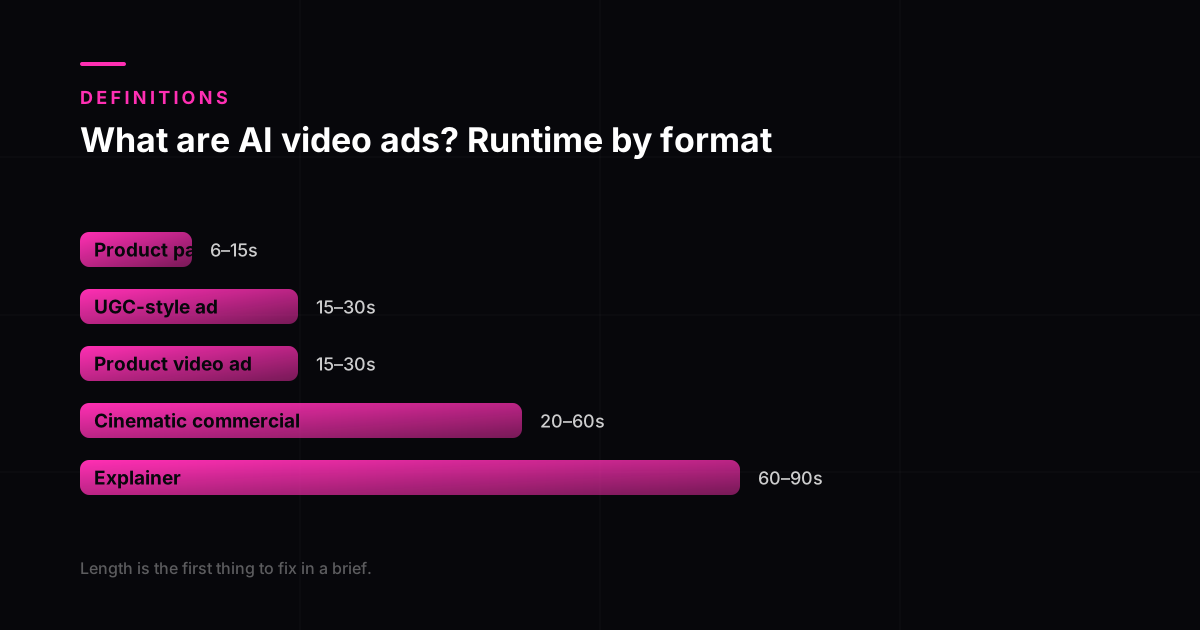
- Product page loop
- 6 to 15s
- UGC-style ad
- 15 to 30s
- Product video ad
- 15 to 30s
- Explainer
- 60 to 90s
- Cinematic commercial
- 20 to 60s
Runtime follows the job and the placement rather than the budget. A commercial is not long because it is expensive.
Length is the first thing to fix in a brief because it constrains everything after it. A 15-second slot has room for one argument; a 90-second explainer has room for a sequence. Deciding it late is how a single-benefit ad becomes a feature list. the product video primer covers the placement question, and our published pricing is per format so the choice can be costed before it is briefed.
Why the format matters commercially in India
The five formats above exist because the spend moved. The FICCI-EY media and entertainment report records digital advertising rising 26 percent to ₹947 billion in 2025, about 63 percent of total Indian ad revenue. Digital placements consume creative in volumes a broadcast schedule never did: many cuts, many ratios, refreshed constantly. And that consumption pattern is what makes production method a strategic decision rather than a procurement one.
Frequently asked questions
What are AI video ads?
Video adverts where the moving footage is generated with AI models rather than captured with a camera, crew and location. The presenter, the product shot, the environment or all three can be generated. The advertising format itself is unchanged from conventional video: same hooks, same structures, same platforms.
What types of AI video ads are there?
Five cover most commercial work: UGC-style ads built to look like customer footage, product ads showing an item in use, cinematic commercials for brand moments, short-form social reels for ongoing presence, and explainer or training video for internal and educational use. Each sells something different and each wants a different cut.
Do AI video ads actually work?
They work on the same terms as any other advertising: the angle, the hook and the offer decide it, not the production method. What AI changes is how many variants you can test within a campaign window, and since paid social rewards tested volume over polish on a single asset, that is where the commercial advantage sits. Why intentional AI ads outperform goes into this.
Which type should a brand start with?
Start with whichever matches your immediate problem rather than whichever is most impressive. Low conversion on a product page points to product video. Ad creative that has fatigued points to UGC-style variants. A quiet social presence points to reels. Repeating the same onboarding explanation points to explainer video. Starting with a cinematic commercial is usually the wrong first purchase.
Do AI video ads need to be labelled?
Yes, and since 2026 in four separate places. India’s amended IT Rules have applied since 20 February 2026, Meta since March 2026, Google Ads since 9 July 2026, and EU AI Act Article 50 since 2 August 2026. Labelling is done through the platform interface rather than inside the creative. Separately, a generated presenter must never claim to be a real customer describing a real experience. The disclosure position in detail covers the full picture.